Has a Person Ever Commited Homiceied Been Released Then Commited It Again
Global report on homicide
2019 Edition
Since the publication of the previous edition in 2014, theGlobal Report on Homicide has been expanded into a special vi-booklet format, five of which are dedicated to thematic areas relevant to the study of the ultimate criminal offence.
Press release
Methodological annex
Homicide information
Homicide in Numbers
-
464,000 people estimated to have been victims of intentional homicide in 2017
-
An boilerplate global homicide rate of 6.1 victims per 100,000 population was estimated in 2017
-
About 90 per cent of all homicides recorded worldwide were committed by male perpetrators
-
Men brand up almost eighty per cent of all homicide victims recorded worldwide
Read more..
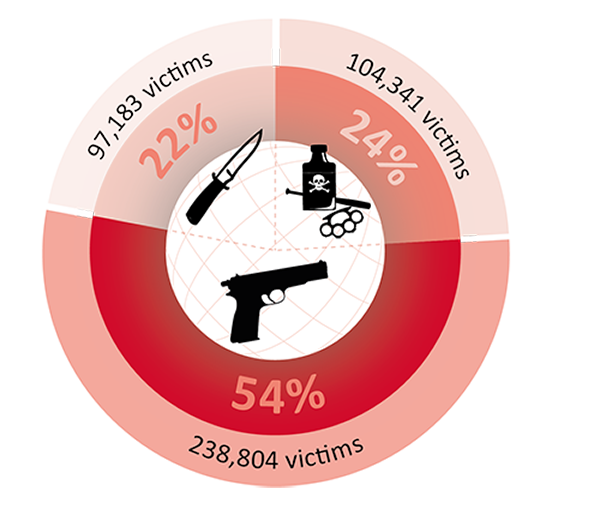
Firearms were involved in more than than one-half of all homicides worldwide in 2017
Read more
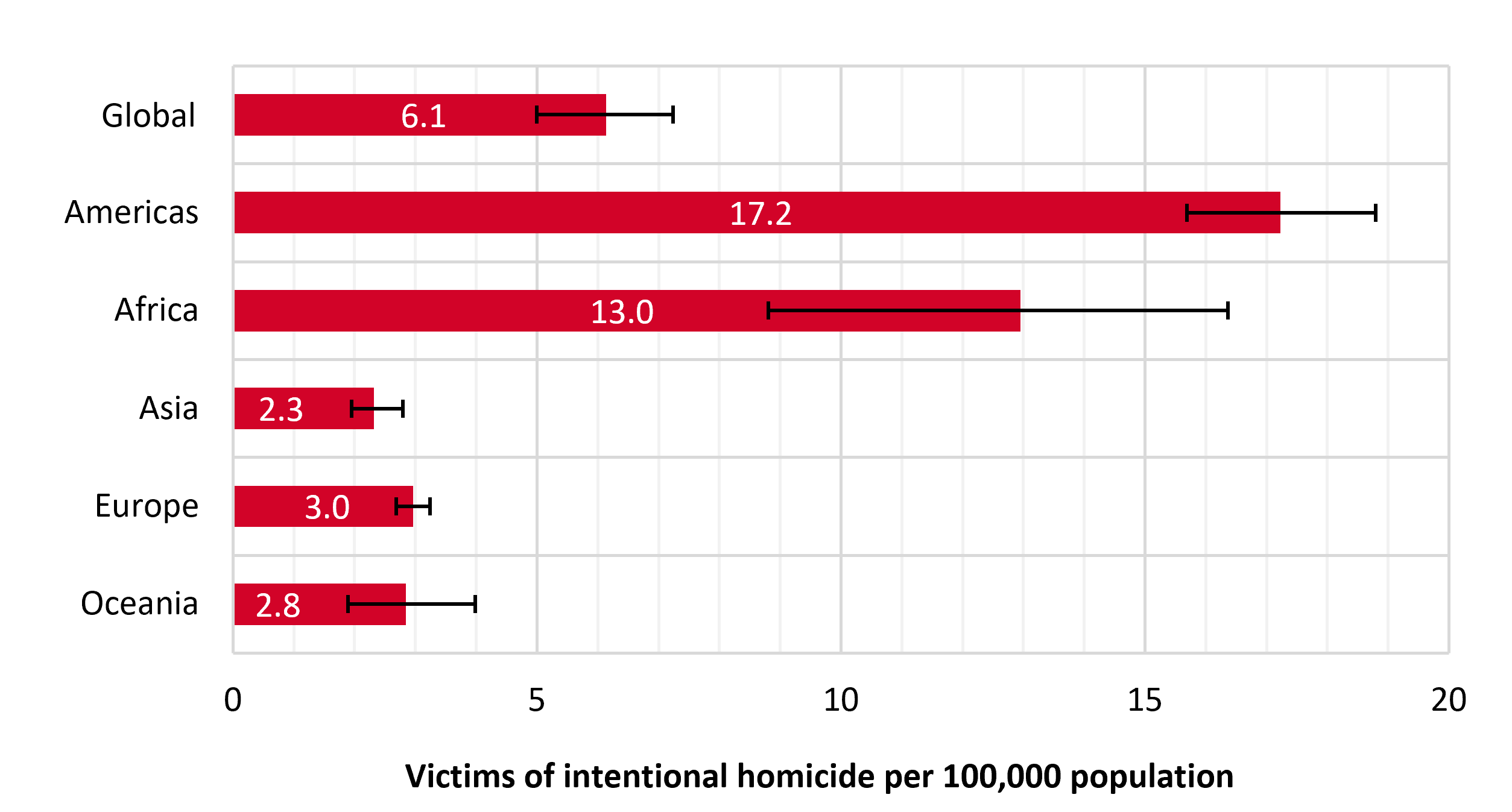
Homicide charge per unit (victims of intentional homicide per 100,000 population), by region, 2017
Read more than
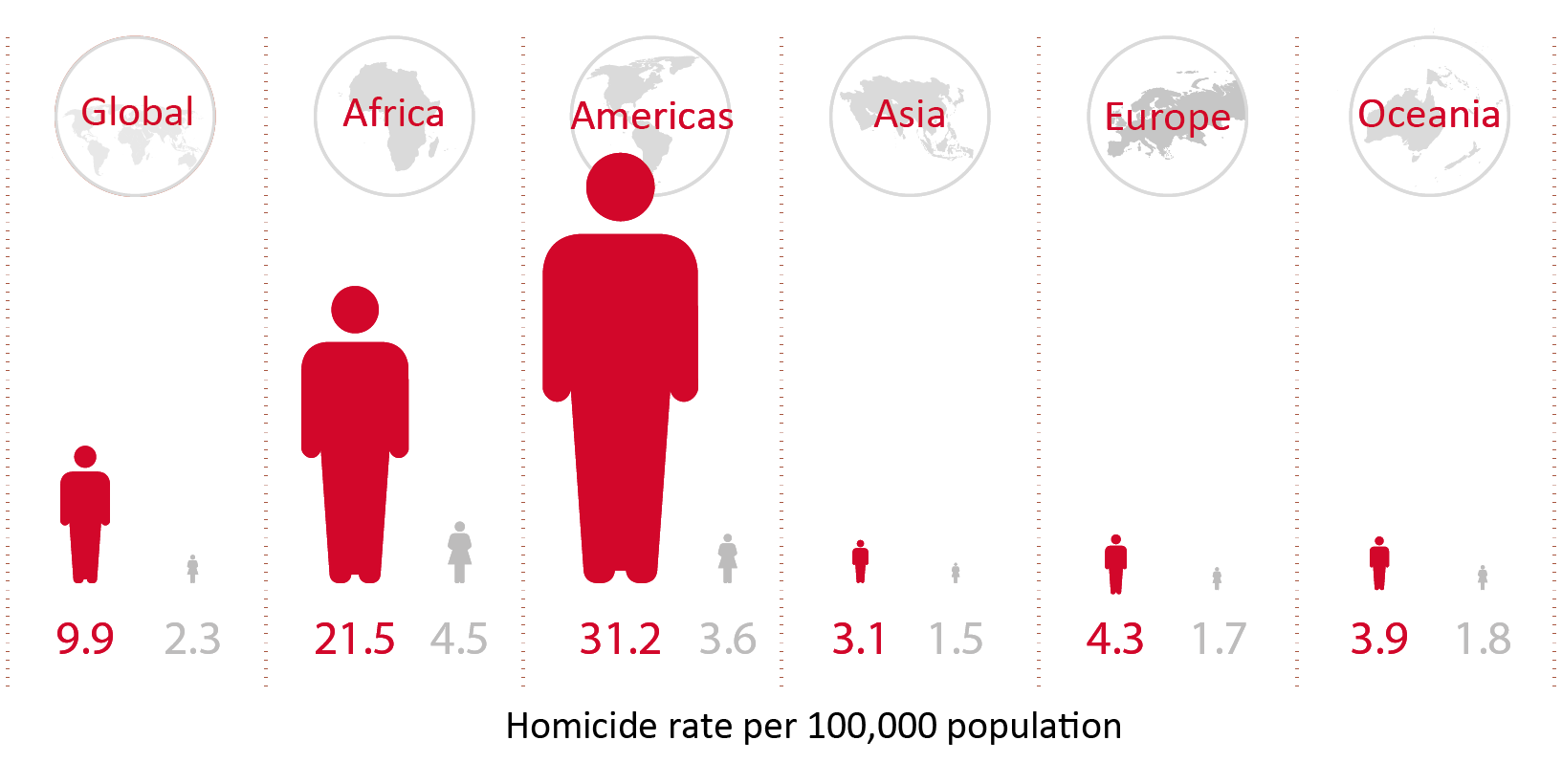
Male homicide rate in the Americas is about x times that of females
Read more than

Crime-related homicide: homicide committed in the context of organized crime and gang violence and homicide committed while perpetrating other criminal acts such equally robbery and sexual attack.
Organized crime kills as many people as all armed conflicts combined
Read more

Interpersonal homicide: homicide that occurs in the context of interpersonal disharmonize.
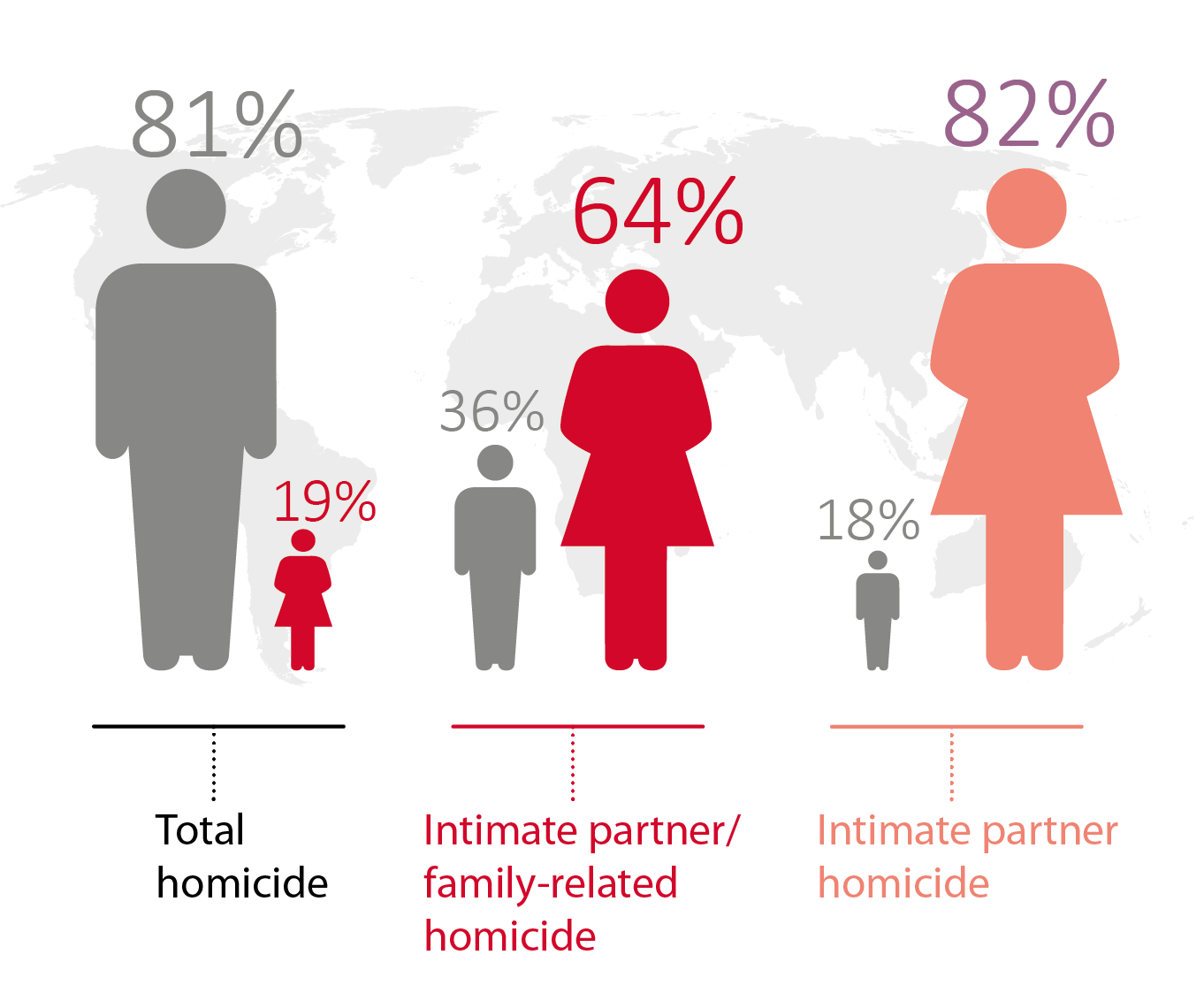
The vast majority of women and girls are killed by intimate partners or other family members
Read more than..
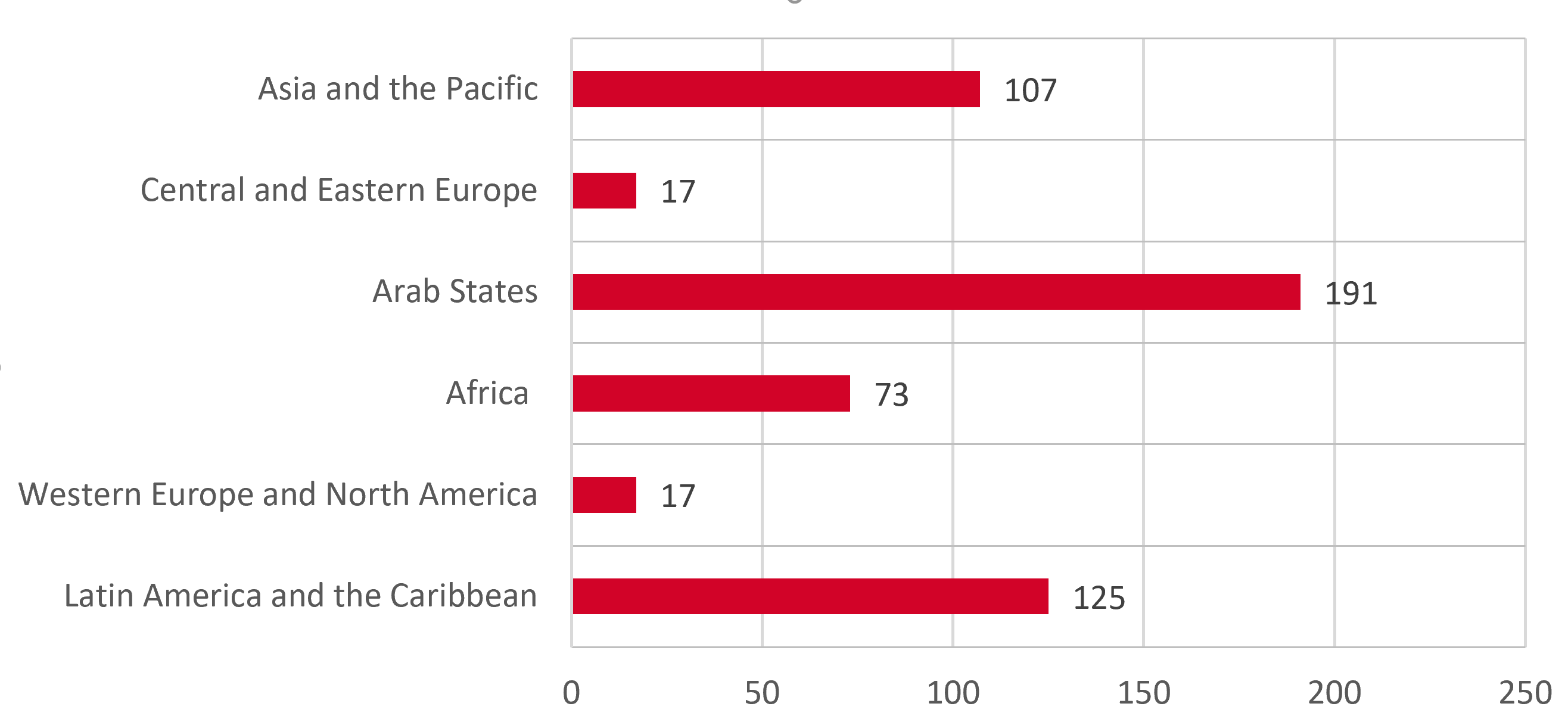
Sociopolitical homicide: homicide linked to social discrimination, political agendas, civil unrest and broader sociopolitical motives, such as killing of human rights defenders, humanitarian help workers or journalists.
Number of journalists killed, by region, 2012–2016
Read more..
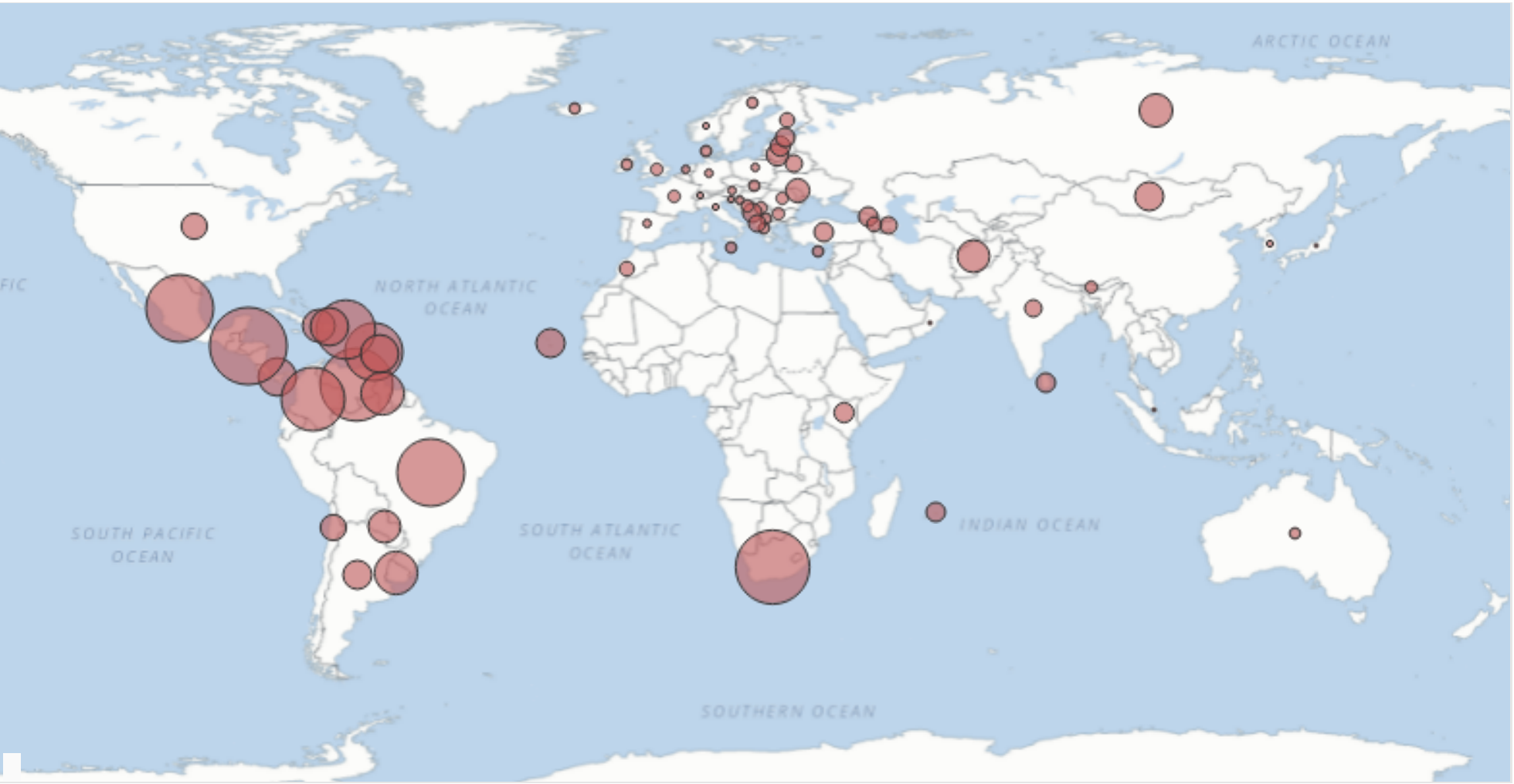
Homicide Data
- homicide rates;
- homicide rates past sex;
- homicide rates by mechanism;
- estimated regional homicide rate;
- homicide by intimate partner/family member;
- persons arrested/suspected for intentional homicide;
- homicide in cities;homicide by situational context;
- and other;
Explore Datasets
Booklet 1: Executive summary
This booklet summarizes the content of the 5 subsequent substantive booklets by reviewing their fundamental findings and highlighting a set of policy implications derived from the analyses presented in them.
Booklet 2: Homicide: extent, patterns, trends and criminal justice response
This booklet constitutes the second part of the Global Report on Homicide 2019. It provides an overview of intentional homicide counts, rates and trends. Starting at the global level, the assay turns to regional, subregional and national trends before the focus shifts to the subnational picture of homicide in selected locations where such data are bachelor and patterns can be identified. Urban homicide patterns and urban homicide trends are examined as are the demographics of homicide victims and the sex of homicide perpetrators. The booklet ends with an overview of the criminal justice response to homicide. In-depth contributions by external experts feature throughout the booklet.
Booklet 3: Understanding homicide - typologies, demographic factors, mechanisms and contributors
Constituting the third office of the Global Study on Homicide 2019, this booklet provides an overview of the drivers of homicide and looks at the different typologies and mechanisms of homicide perpetration. The drivers of homicide are manifold and have to do with a number of factors: socioeconomic and environmental conditions, governance and the dominion of constabulary, political stability, demographics, and cultural stereotypes (particularly in relation to gender roles). Homicidal violence is besides influenced by the availability of mechanisms such as firearms or sharp objects, and past the use and trafficking of psychoactive substances. The links betwixt homicide and socioeconomic and environmental factors, along with the means in which these factors may drive homicide or contribute to its containment, are analysed in booklet 4, which focuses on the interactions between homicide and development.
Booklet four: Homicide, development and the Sustainable Evolution Goals
Constituting the fourth role of the Global Study on Homicide 2019, this booklet starts by examining the relationship between homicidal violence and level of evolution with reference to the Sustainable Development Goals. A macroanalysis of the extent to which homicide rates tin can be explained by national levels of development is then presented. The assay is based on a gear up of models that incorporate the latest available homicide data and were designed to take into account the social and economic factors virtually strongly correlated with homicide rates across countries. Comparing the homicide rate predicted on the basis of a country'due south level of development with the actual homicide rate reported past that country helps to analyze how effective evolution policies can be instrumental in reducing homicidal violence.
Booklet 5: Gender-related killing of women and girls
Constituting the fifth part of the Global Study on Homicide 2019,this booklet gives an overview of the telescopic of gender-related killing of women and girls. It provides in-depth analysis of killings perpetrated within the family sphere and examines forms of gender-related killings perpetrated outside the family sphere, such every bit the killing of women in disharmonize and the killing of female sexual activity workers. The booklet explores the calibration of intimate partner/family unit-related killings of women and girls, and describes different forms of gender-related killings of women. Information technology also looks at the characteristics of the perpetrators of intimate partner killings, the link between lethal and non-lethal violence against women, and the criminal justice response.
Booklet 6: Killing of children and young adults
Violence against children is a multidimensional phenomenon that is oft underreported; it tin can take many forms and is influenced past a wide range of factors, such as the personal characteristics of the victim and perpetrator and their cultural and concrete environments. Such violence remains subconscious in many instances considering children are oft agape to study acts of aggression, and likewise because reporting mechanisms tend to be inaccessible or even not-real. Children may also keep silent about the violence they suffer when it is perpetrated past parents and other family members, or by another figure of say-so such as an employer, customs leader or police officer. Lethal violence against children can occur in a continuum of violence, representing the culmination of various forms of violence that children may be subjected to in different settings. I of the targets of Sustainable Development Goal 16 on peace, justice and stiff institutions is to "end corruption, exploitation, trafficking and all forms of violence confronting and torture of children".
Source: https://www.unodc.org/unodc/en/data-and-analysis/global-study-on-homicide.html

Post a Comment for "Has a Person Ever Commited Homiceied Been Released Then Commited It Again"