How to Upload Background Image in Html
What a user sees on a website will affect how good their user experience is. It will besides affect how hands they tin apply the whole site in general.
Calculation images to the background of certain parts of a website is often more visually highly-seasoned and interesting than but changing the background-color.
Mod browsers support a variety of image file types similar .jpg, .png, .gif, and .svg.
This commodity explains how to add images to your HTML lawmaking and how to and so fine-melody them to wait better.
Background Image Syntax
The first step is to make sure you lot create an assets directory (folder) to concord the images you want to use in your projection.
For example nosotros can create an images folder in the project we are working on and add together an paradigm called sunset.png that nosotros want to use.
The background-image CSS holding allows you to and then identify the paradigm backside any HTML element you lot wish.
This could either exist the whole page (past using the torso selector in CSS which targets the <body> chemical element in our HTML), or only a standalone specific office of the page such equally a section chemical element like in the case below.
To add a groundwork-image to a section tag in your .css file, write the following code:
section { background-epitome: url("images/sunset.png"); } Let's discuss what's going on here in item:
-
sectionspecifies the tag you lot want to add the image to. -
url()is used to tell CSS where our image is located. - Inside the parentheses,
"images/sunset.png"is the path to the image. This lets the browser know what URL to pull. - The path in this case is called a
relativepath which means it is a local file, relative to our project and to our current working directory and is not a spider web address. To add images we can also use anaccentedpath, which is a full web accost and starts with a domain URL (http://www.). - Using quotes is a skillful addiction merely nosotros can omit them, then
groundwork-epitome: url(images/sunset.png)works the same. - Don't forget the semicolon!
How to Terminate Groundwork Repeat
When yous apply a groundwork image to an element, by default it will echo itself.
If the image is smaller than the tag of which information technology'southward the background, it will echo in order to fill in the tag.
How do we end this from happening?
The background-repeat property takes in iv values and we are able to change the direction in which the image repeats, or stop the image from repeating itself all together.
section { background-repeat: echo; } This is the default value if nosotros don't give the background-echo property a value. In this case the image is repeated both horizontally and vertically so in both 10-direction and y-direction respectively until it fills the space.

section { background-repeat: no-repeat; } 
The no-repeat value stops the image from repeating itself from all directions. The image is only shown once.
section { background-repeat: repeat-y; } This value repeats the prototype just horizontally on the folio. The image is repeated beyond the page, in the ten-direction. The x-direction in math is from the left to the correct.
section { background-echo: repeat-y; } This value repeats the epitome simply vertically on the page. The image is repeated down the folio ,in the y-management. The y-management in math is from top to bottom.
How to Ready Groundwork Position
Later on adding a background paradigm and stopping it from repeating, we are able to further command how it looks within the background of the tag by improving its position.
We'll apply the background-position holding to practise this.
The selector takes in two values. The beginning one is for the horizontal position, or ten-direction (how far across the tag). The second ane is for the vertical position, or y-direction (how far down the tag).
The values can be units, similar a pair of pixels:
section { background-position: 20px 30px; } This volition motility the image 20px across and 30px down the containing tag.
Instead of pixels we tin can use a gear up of keywords like right, left, meridian, downward, or middle to place the prototype at the right, left, pinnacle, downwards, or center of the tag.
section { background-position: right center; } This places the epitome at the right hand side of the middle of the tag.

If we wanted to center it both horizontally and vertically, we would practice the post-obit:
section { background-position: centre middle; } 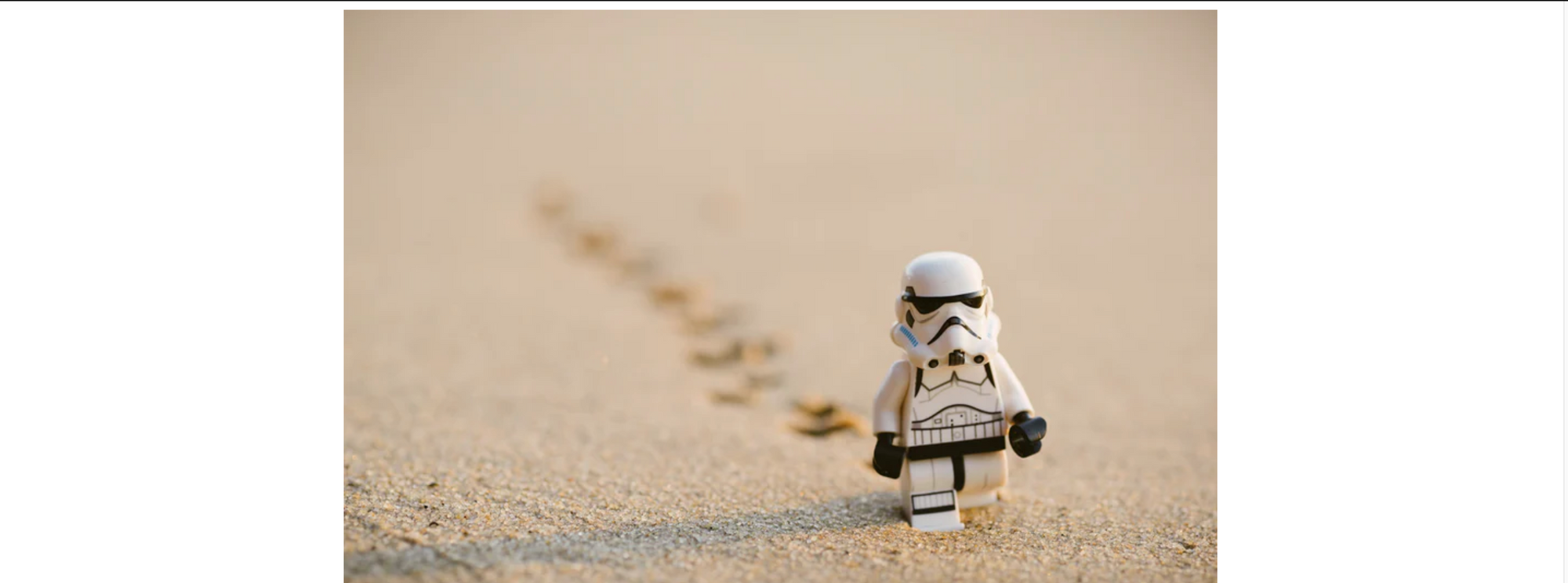
To position an image with finer detail, information technology is worth mentioning that we can apply percentages.
section { background-position: 20% 40%; } This positions the image 20% beyond the tag and forty% downwards the tag.
So far we accept seen values used in combination, simply nosotros can also only specify one value like groundwork-position: 20px; or background-position: center; or background-position: 20%;, which applies it to both directions.
How to Resize a Groundwork Prototype
To control the size of the background epitome we can utilize the background-size property.
Again, like the previous properties mentioned, it takes in two values. 1 for the horizontal (10) size and one for the vertical (y) size.
We can utilise pixels, similar and so:
section { background-size: 20px 40px; /* sizes the paradigm 20px across and 40px downwardly the page */ } If we do not know the exact width of the container we are storing the prototype in, at that place is a set of specific values nosotros can give the holding.
-
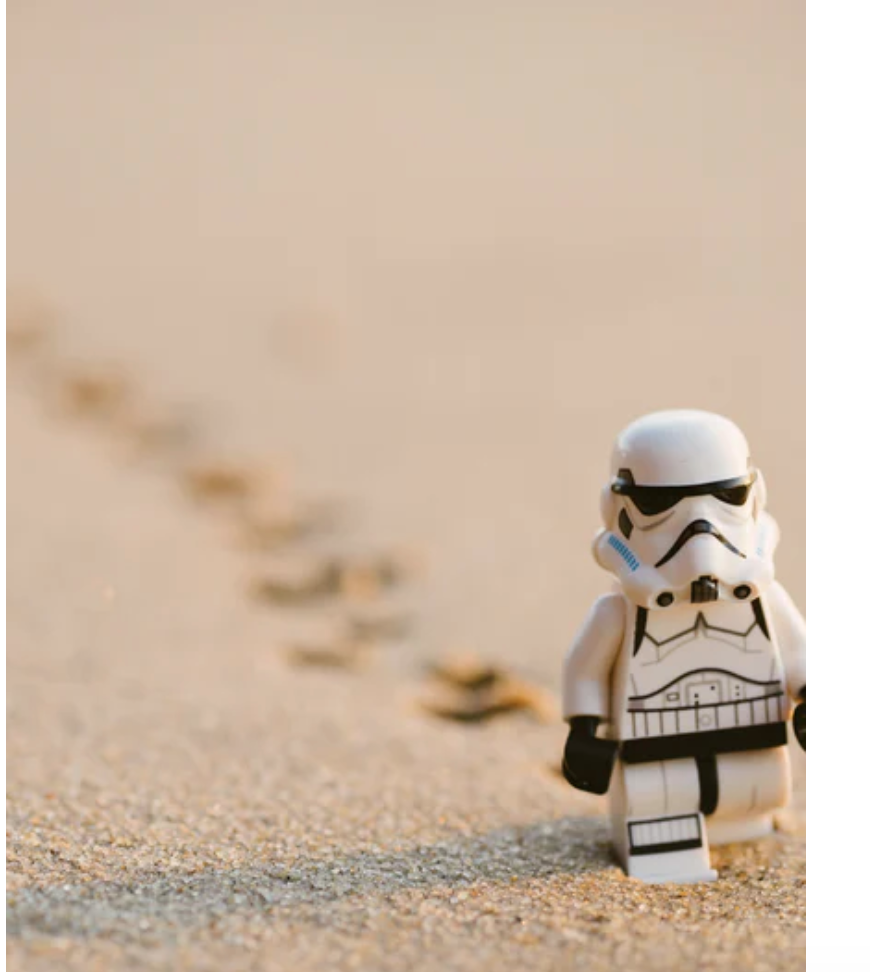
background-size: cover;resizes the background epitome so it covers upward the whole tag'due south groundwork space no thing the width of the tag. If the image is besides big and has a larger ratio to the tag information technology is in, this ways the image volition get stretched and therefore cropped at its edges. -
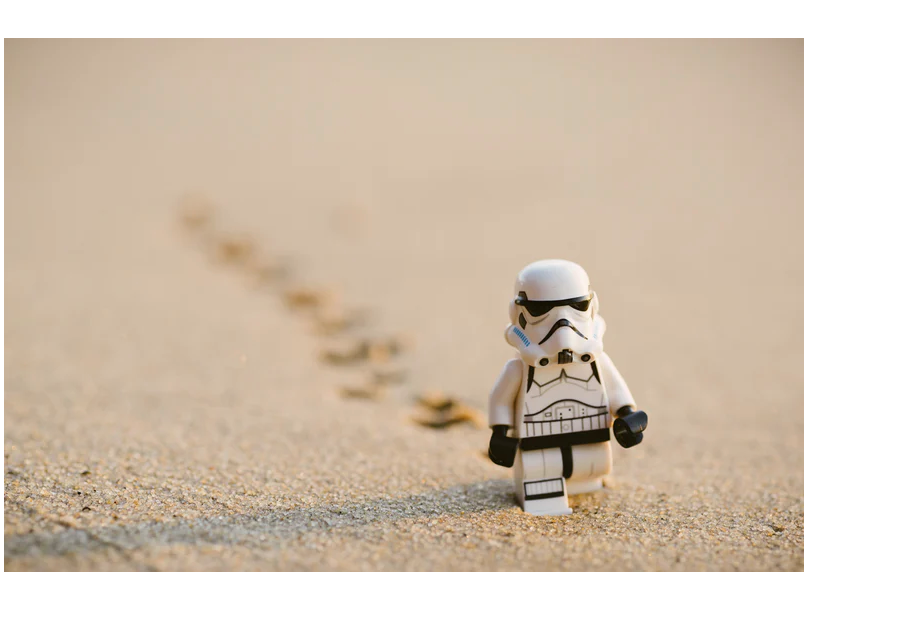
background-size: contain;contains the image, equally the proper name suggests. It will make sure the whole paradigm is shown in the groundwork without cropping out any of information technology. If the image is much smaller than the tag there volition be space left empty which will make information technology repeat to fill it up, and so nosotros can use thebackground-echo: no-repeat;rule we mentioned earlier.
The rule background-size:comprehend; in this case will crop of parts of the epitome
When we alter it to background-size:contain; we meet that the epitome shrinks to fit the section tag.
How to Use the Background Zipper Property
With the background-attachment property we can control where the background image is attached, meaning if the image is fixed or non to the browser.
The default value is background-attachment: whorl;, where the background paradigm stays with its tag and follows the natural menses of the folio past scrolling upwards and downward every bit nosotros scroll up and downwardly.
The second value the property can have is background-attachement: fixed;.
This makes the background image stay in the same postion, stock-still to the page and fixed on the browser's viewport. This creates a parallax effect which you can run into an example of here:
See the Pen past Dionysia Lemonaki (@deniselemonaki) on CodePen.
Background Gradients
A dissimilar employ case for the background-image property is for telling the browser to create a gradient.
The background-image in this case does non accept a URL, only a linear-slope instead.
The simplest way to do this is to specify the angle. This controls the direction of the gradient and how to colors will blend. Lastly add ii colors that yous desire blended together in a gradient for the tag's background.
A gradient that goes from top to bottom and from black to white is:
section { groundwork-image: linear-slope(blackness,white); } The virtually mutual degrees used for gradients are:
-
0degfrom top to bottom -
90degfrom left to right -
180degfrom lesser to peak -
270degfrom right to left
The above degrees each correspond with to elevation, to right, to bottom and to left, respectively.
section{ groundwork-image: linear-slope(to left,pink,orange); } See the Pen by Dionysia Lemonaki (@deniselemonaki) on CodePen.
Instead of keyword colors we tin use hex colors to be more than particular and take a wider range of options:
section{ background-prototype: linear-gradient(to left,#42275a, #734b6d) } See the Pen by Dionysia Lemonaki (@deniselemonaki) on CodePen.
We can too include more than two colors in a gradient, creating different affects and color schemes.
Conclusion
This marks the end of our introduction to the bones syntax of the groundwork-image holding.
From hither the possibilities are endless and leave room for a lot of creative expression. These effects help the user have a pleasant experience when visiting your website.
I hope this was helpful, and thank you for reading.
Have fun with your designs and happy coding!
Learn to code for free. freeCodeCamp'southward open source curriculum has helped more than xl,000 people get jobs as developers. Go started
Source: https://www.freecodecamp.org/news/css-background-image-with-html-example-code/

Post a Comment for "How to Upload Background Image in Html"